Rave Function
In the gameFrequency Swell, recorded from the desktop game: the music rolls in across the floor as waves.

Rave Function

Music, lights and space, moving as one.

A platform for silent-disco parties. Everyone hears the music in their own headphones, in step, while it drives the lights, the screens and the stage around them. You don't need a headset: bring headphones and the mood to move. A headset is one more way in.

Who it's for ↓Ways in, today ↓What's coming ↓

Music · lights · space

The music runs the room.

A song is more than something you hear. Its beats and drops move the lights, fill the screens and shape the stage, so the whole space plays along.

Pick the show's colour

The lights on this page take the colour you pick. At a party the Mac app, Rave Function Studio, does it for real: one colour reaches the stage in every headset and, over Art-Net, the room's own lights.

Silent disco

Your own headphones. The same beat as everyone.

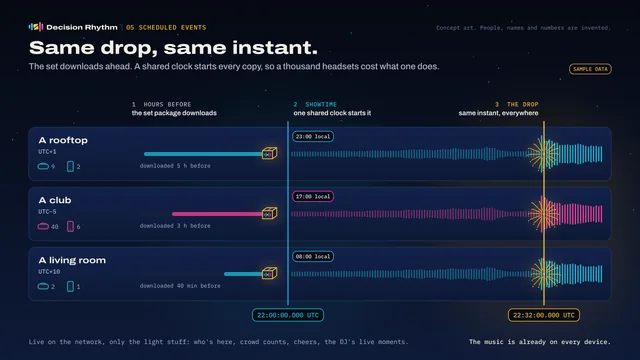
Everyone hears the music in their own earbuds or headset, started from one shared clock, so the drop lands for the whole room at the same moment. Talk without shouting, dance at your own volume, and still move as one.

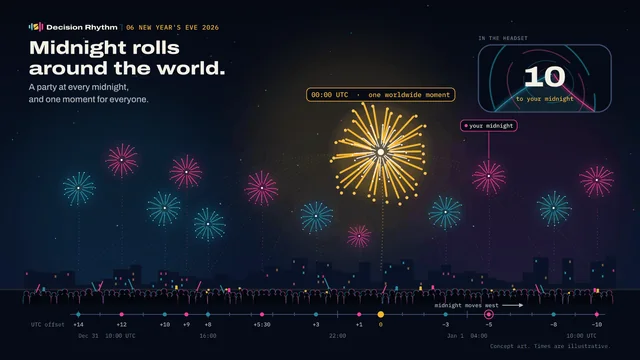
Today that is one party on one clock, with phones and headsets joining it. Many rooms and places sharing one set, the drop landing everywhere at once, is where it's heading.

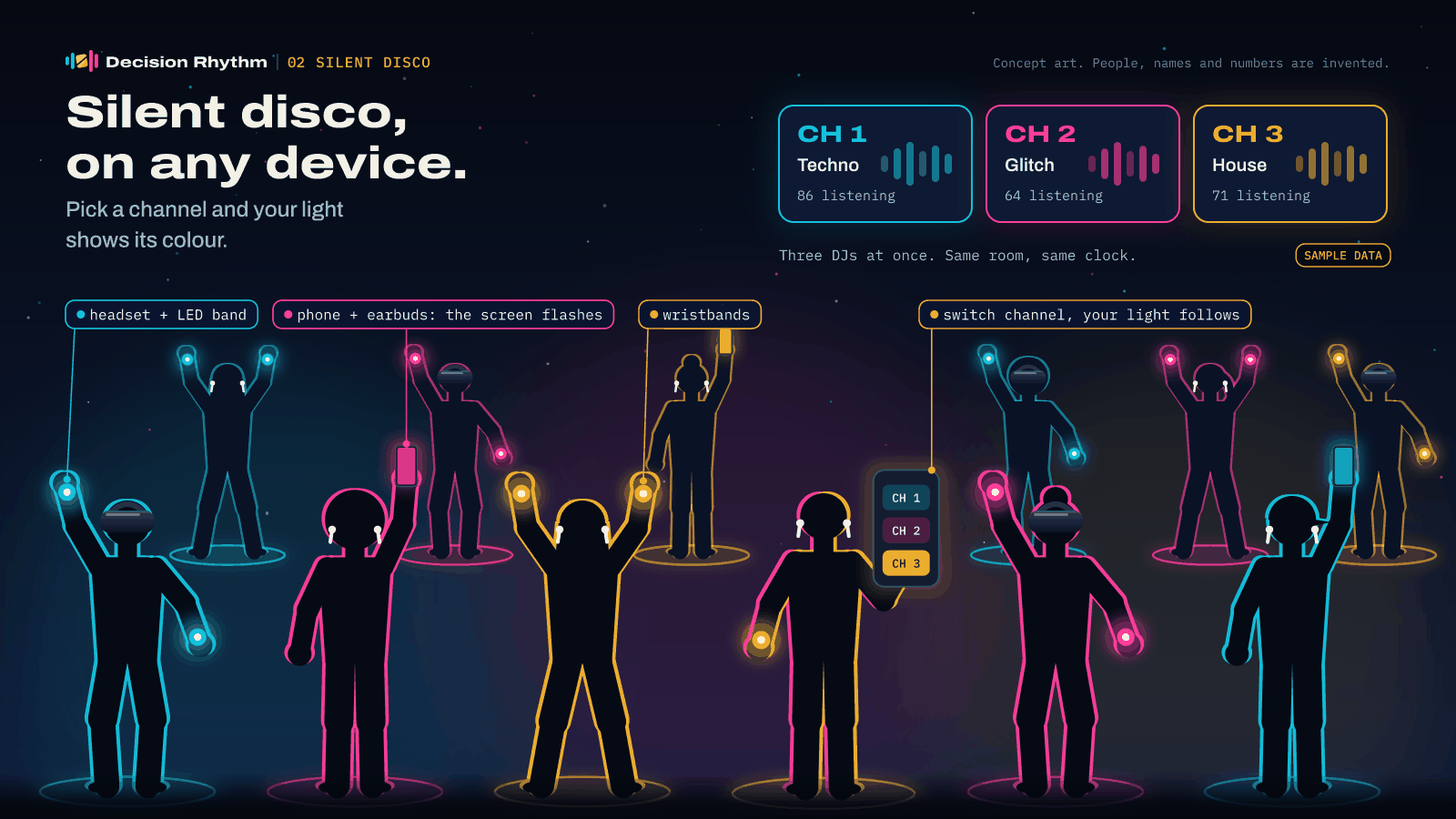
A room of dancers, each lit in the colour of the channel they are listening to: cyan for channel 1, magenta for channel 2, amber for channel 3. Some wear headsets with LED wristbands, some hold up phones whose screens flash in their channel colour, some wear only earbuds and wristbands.
ConceptSilent disco on any device: headsets, phones with earbuds and LED wristbands in one room, on one clock. The people and names in it are invented.

A phone in step with the party

2.7 ms

Median drift of the music on an iPhone running Rave Function.

Measured

Players one host carried

25

Every view frozen under 3 % of the time, with the host on real Wi-Fi. Simulated players; one stage seats five today.

Measured

Same targets, two runs

19 ms

Median gap between two runs' clean hits on the same 609 targets, played together on the shared clock, which leans neither way (median offset +1.5 ms).

Measured

Everyone's invited

For the ones on stage, and the ones who'd rather not be.

DJs and performers. People who love the spotlight and people who dance at the back. People who play games and people who never have. What connects them is moving together to music and light.

Who's coming?

Pick one, and the ways in below put yours first.

Ways in, today

Join with what you have.

On a Mac

Rave Function Studio runs the room

The DJ's console for a party. It plays the show for everyone: stage colours, strobe, lasers, fog and blackout, from its panel or from a control surface over OSC. Strobes never flash more than three times a second.

It drives the room's lights over Art-Net, sends every beat and bar to lighting and video software, and puts a dropped video or 3D model in every headset. And it watches the whole party in 3D: orbit the stage, ride behind any player, or look through their eyes.
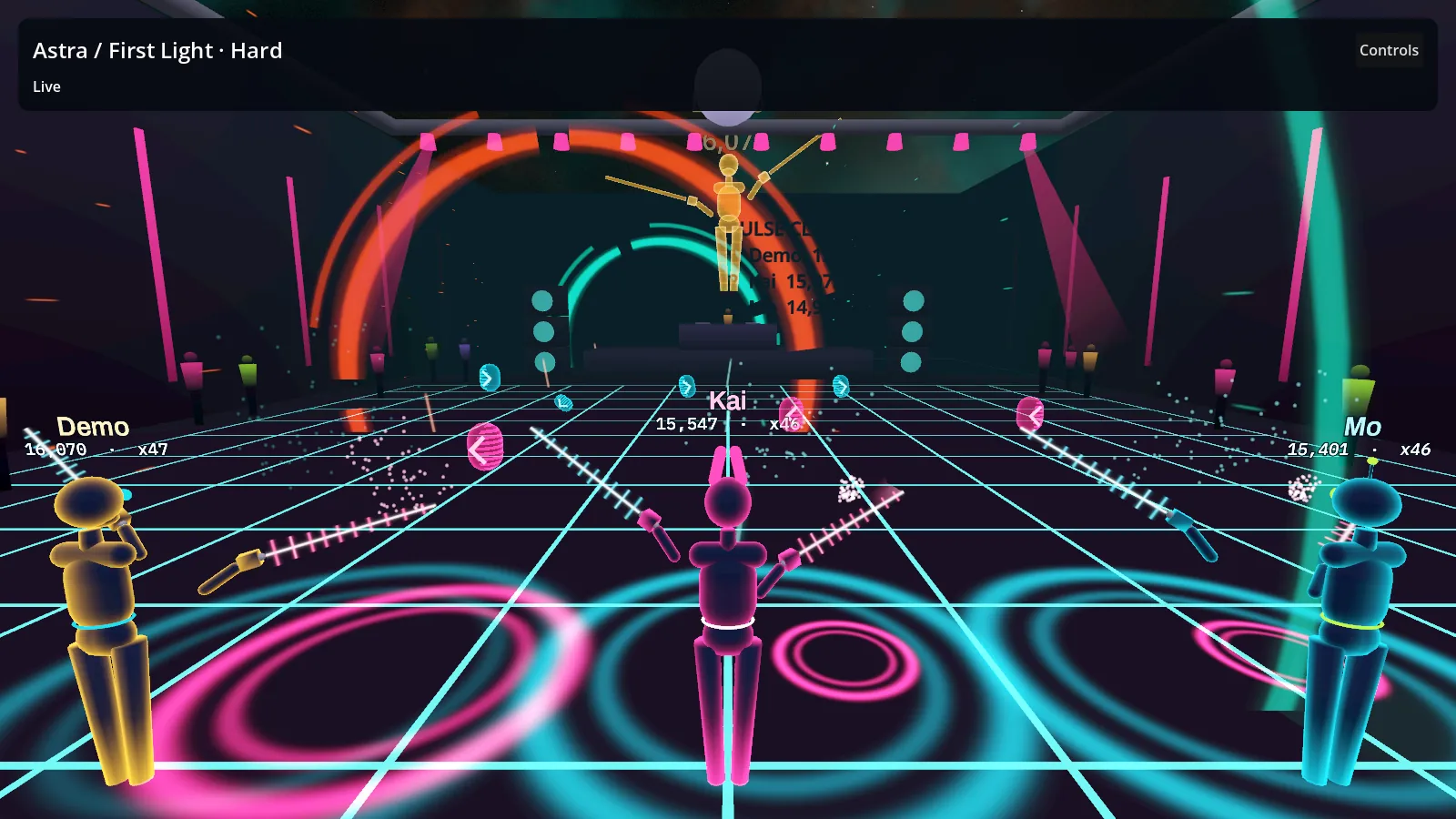
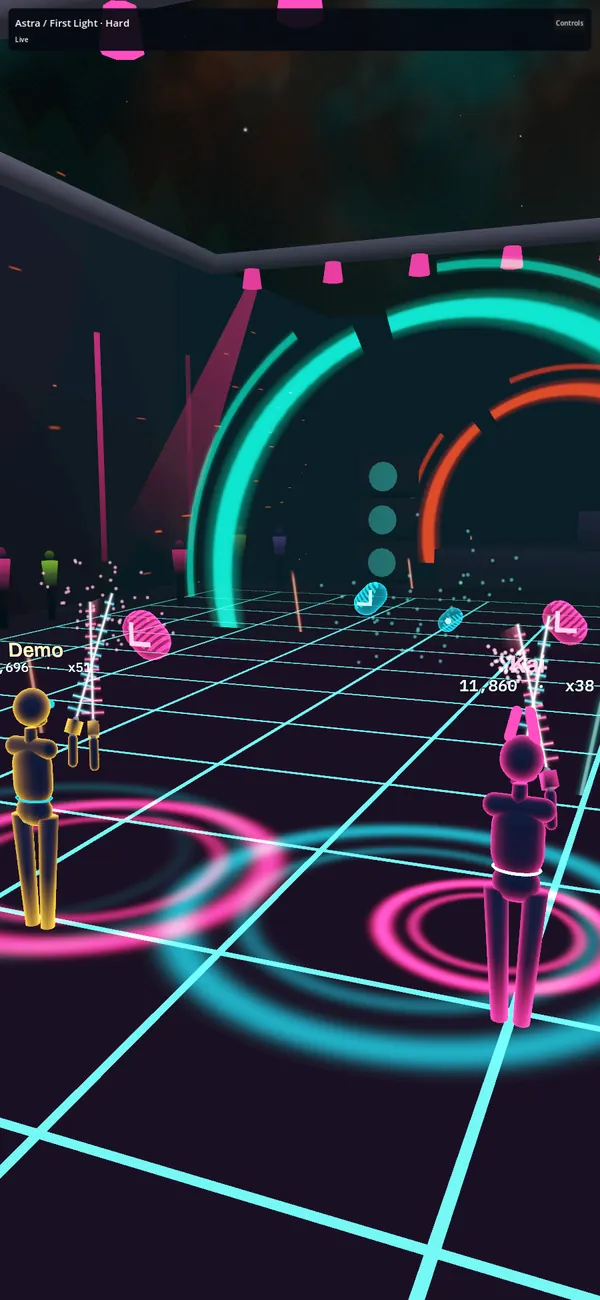
Rave Function Studio's window during a party: its title bar reads Astra / First Light, Hard, Live. Three players stand on a dance floor of cyan grid lines with glowing rings at their feet: Demo in amber, Kai in magenta and Mo in cyan, each holding two antennas of light. Ahead are the DJ booth and an LED wall with the party's standings, a light rig with magenta lamps overhead, magenta light shafts and the crowd along the walls.
In the gameThe Mac app's window during a party in Pulse Club, one of the game's venues: three auto-played players with invented names, the light rig, the LED wall and the crowd along the walls. Recorded on a Mac from the app itself.

On a phone

Rave Function puts the party in your ears

On iPhone, Rave Function finds a party nearby and plays its music in your earbuds, in step with the room. It shows the stage in 3D too, so you can watch from any angle while you dance.

2.7 ms median drift of the music on the phone Measured

The same party on a phone-shaped screen, seen from the back of the room: Demo in amber and Kai in magenta hold antennas of light over glowing rings on the cyan grid floor while capsules fly toward them, under the light rig, with the crowd along the far wall.
In the gameThe iPhone app's view of the Pulse Club party, drawn by the same app on a Mac at a phone's screen size.

Quest and Vision Pro

Play inside the music

Put on a headset and the music rolls toward you across a dancefloor as waves. Each one crests into a glowing capsule right where the beat lands, and your hands hold antennas of light. Every wave is a signal: meet it square on and it comes in clear.

On Vision Pro the light comes from your hands, no controllers. On Quest you play with the controllers, with haptics in each hand (tested on Quest 2).

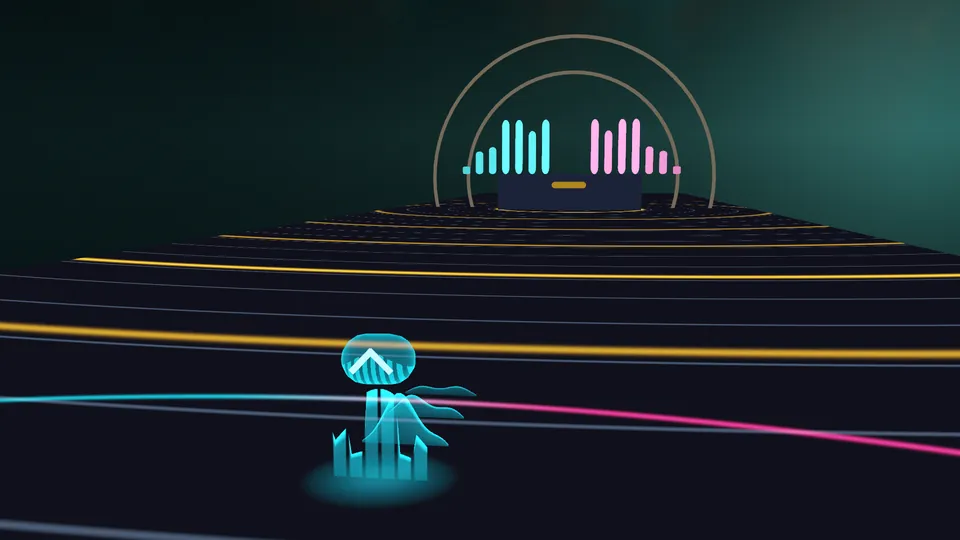
  1. A cyan capsule with an upward chevron rides a low wave of equalizer bars on the dark dancefloor, toward the shoreline arc.The wave rolls in, already showing which way to meet it.
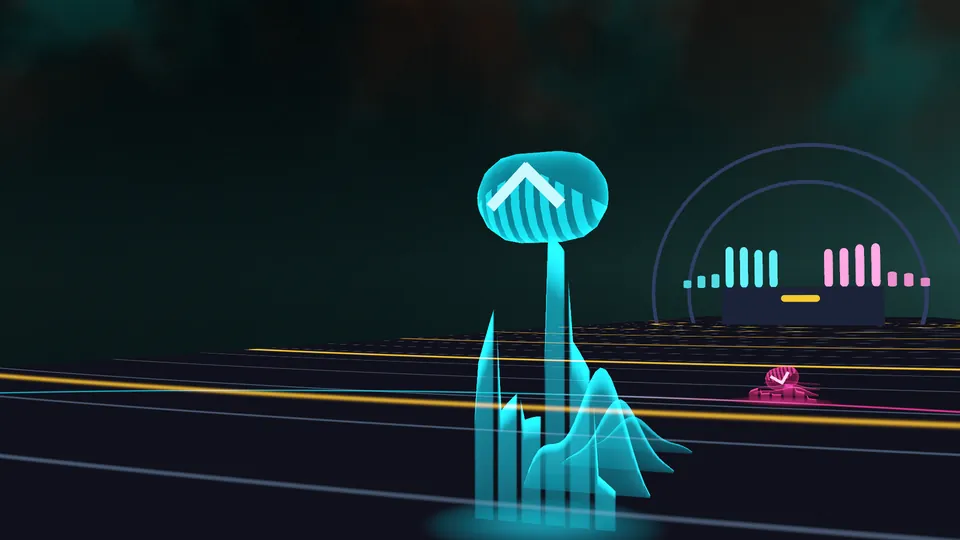
  2. Close to the player, a cyan capsule is held high on a tall crest of equalizer bars and sine ripples.The crest lifts the capsule to where the beat lands.
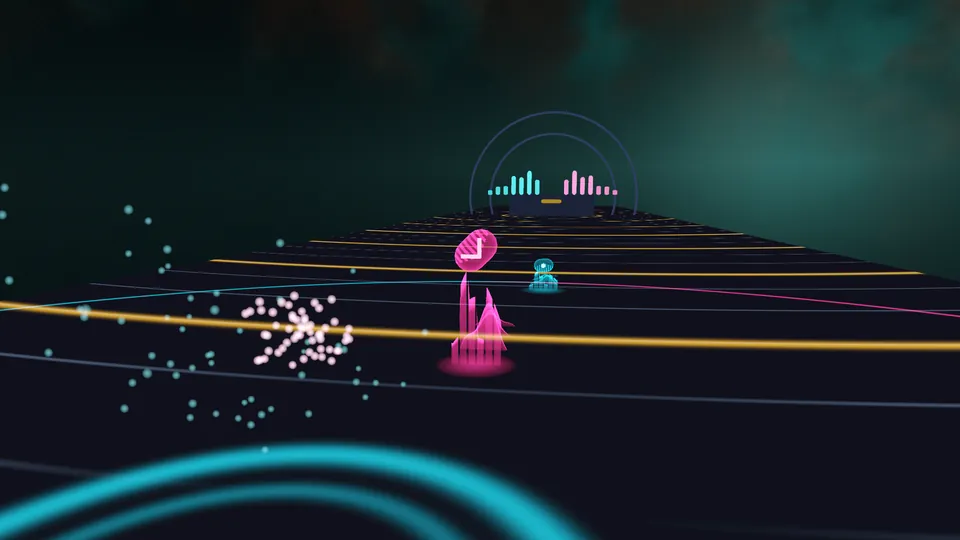
  3. A burst of white and cyan light drifts up and away where a capsule was met, and a cyan ring spreads across the floor.The light: meet it on the beat and it breaks into light.

In the gameRecorded from the desktop game on its own original song, auto-played, with the score left out and nothing in the player's hands.

Try the reception. Turn the antenna: square on, the signal comes in clear; off the angle, it breaks up.

Off the angle: received, with static.

As the game judges it: within about 25° of the capsule's chevron the signal is clean, up to 72.5° it comes through with static, further off it is lost.

The room itself

Lights, signs and screens follow the show

Rave Function Studio lights LED strips and DMX fixtures over Art-Net in the show's colours, and sends every beat, every bar and the song's tempo over OSC, so lighting and video software can carry the music onto walls and screens.

Its LED sign camera flies a drone's view just above and behind a player and streams it to an LED sign, 64 by 112 pixels, 20 times a second.

In the gameWhat the Mac app sent to a stand-in sign during the Pulse Club party: every other frame, 64 by 112 pixels, drawn here as LEDs.

Coming

Next: radio, and a signal inside the music.

Coming

Radio pickup

Local stations on an antenna dial. Sweep through the static, settle on a station that publishes its own stream, and the game plays it live, finding the beat in what it hears and storing nothing. Designed; building is next.

Coming

The Signal

Timing and maps carried inside the music itself, so anyone who hears it, from a stream, a radio or a speaker across the room, lines up with the party. A draft protocol, so far tested in a lab, not yet in the apps.

Ideas

Ideas we're exploring.

Directions to explore, not built and not promised.

Idea

Stages to move between

Several stage set-ups in one party, to wander between, one of them with a DJ character on stage. Today a party has one venue at a time.

Idea

Walkabout

A night walk, alone or with friends. The walk knows where you are, and lighting scenes in alleys and on walls answer your music in playful ways: a 3D artist's sense of play, out in the real world.

More to see

See it in action · recorded play

Two real runs, taken apart.

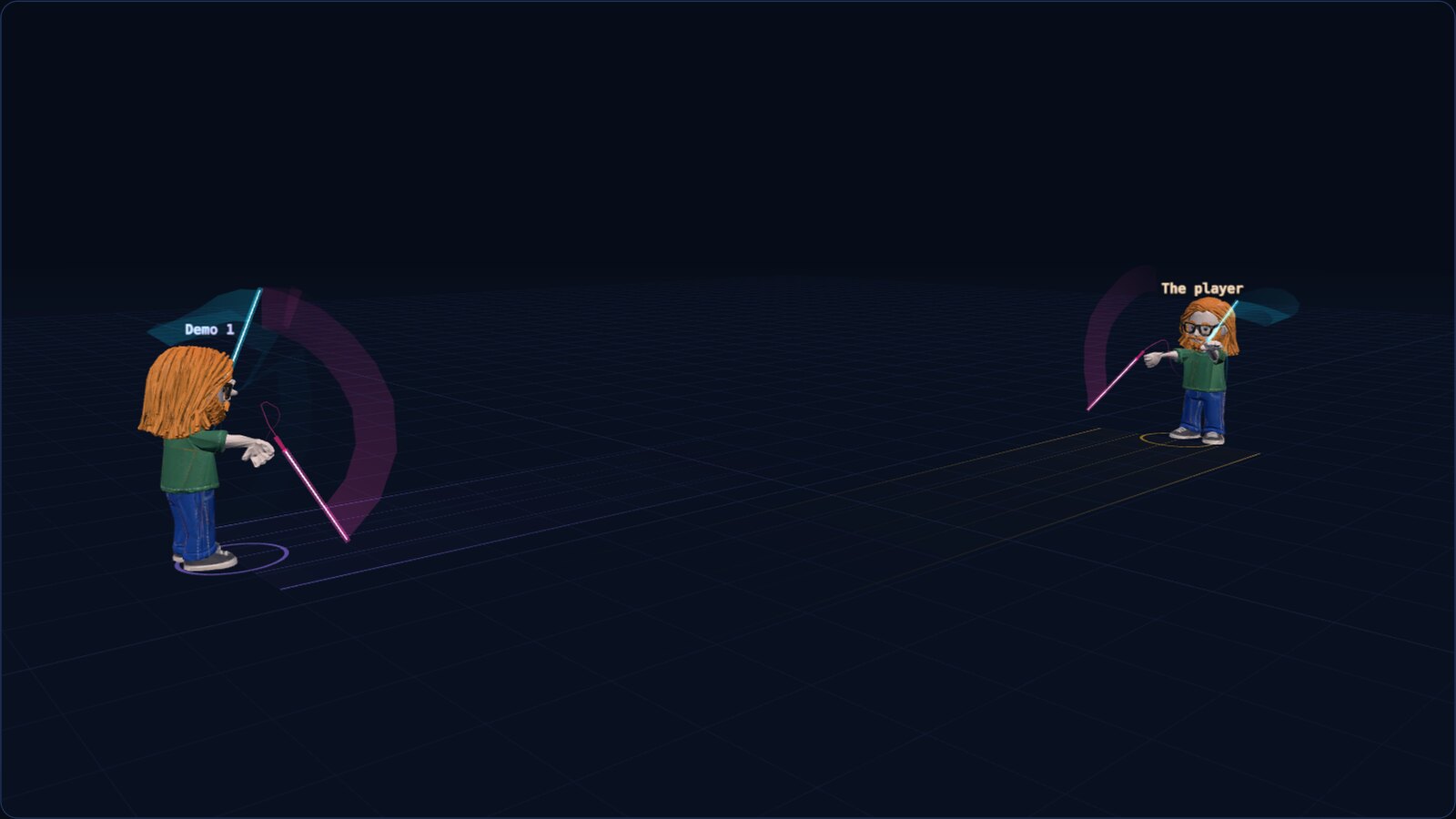
A party played on Apple Vision Pro, replayed in 3D from what the headset recorded: the head and both hands, about 28 times a second, opposite the party's host. Orbit it, slow it down, and stop at five moments to read the raw samples.

Open the 3D replay (about 4.3 MB)

Where it's going · concept pictures

From one room to midnight around the world.

See all six concept pictures →